
Improve Student Behavior: 4 Steps to a Prosocial Classroom
Article adapted from Prosocial Education: the Four Pillars
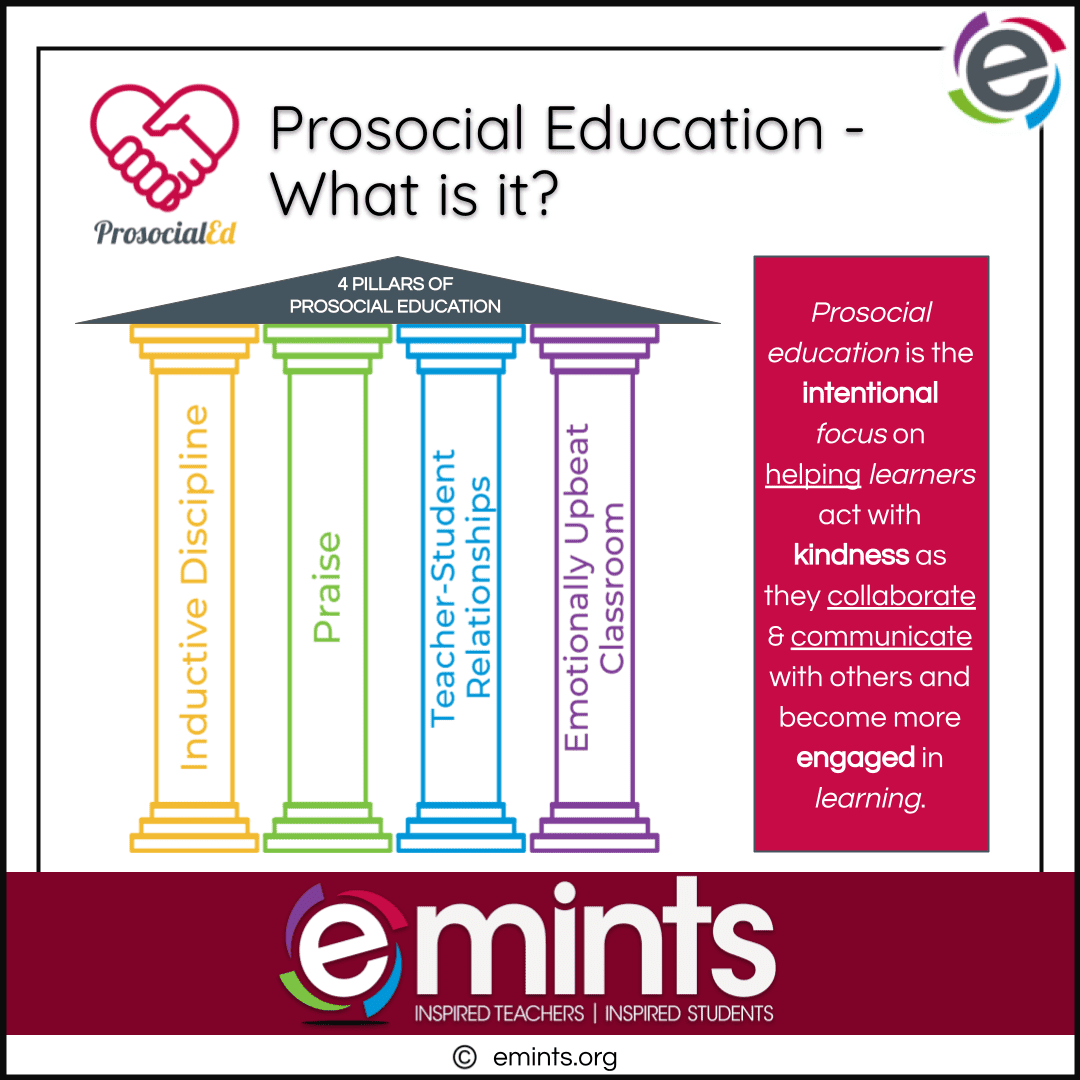
Prosocial education is the intentional focus on helping learners act with kindness as they collaborate and communicate with others and become more engaged in learning. A focus on prosocial education helps teachers create a classroom culture where teachers and students feel valued and respected.
In the prosocial classroom, educators actively teach learners how to behave and why they should behave this way. The four pillars of prosocial education are:
- inductive discipline
- praise
- teacher-student relationships (TSRs)
- emotionally upbeat classroom (EUC)
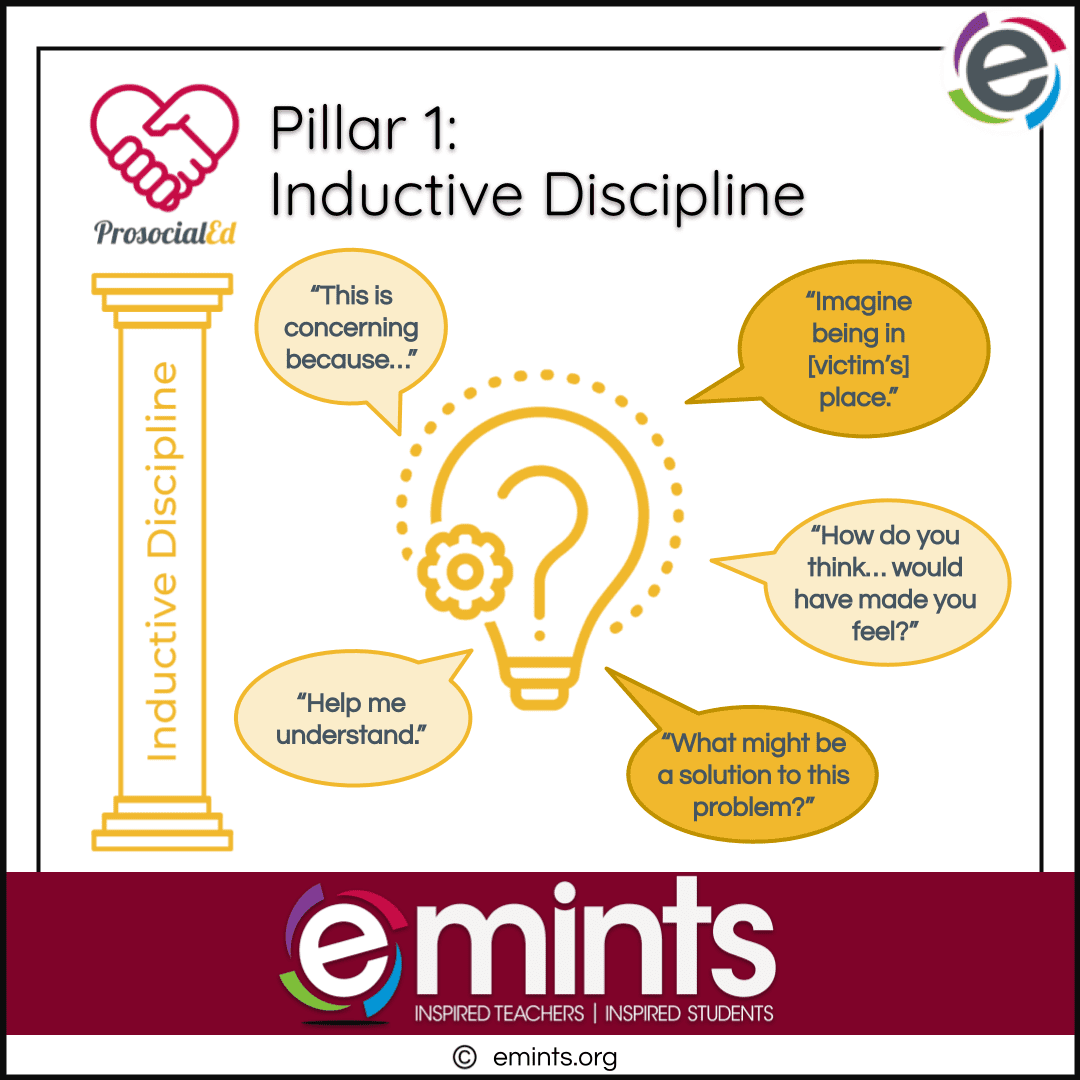
Prosocial Education Pillar 1: Inductive Discipline
Inductive discipline is a positive and highly effective approach to discipline. In this approach, discipline is used as a teaching moment to help students learn how and why they should behave the way they should.
When students have a valid reason for what they are being asked to do, they are more willing to comply. Lindsay Jackson, a 5th-grade Science and Social Studies teacher from Bois D’Arc Elementary, mentions how transformative this practice can be: “I feel more confident with my classroom management, and I have fewer behavioral issues in my classroom.”
Inductive discipline helps students:
- learn how they should behave so they can begin to regulate their own behavior.
- become intrinsically motivated instead of relying on punishments, rewards, or other extrinsic motivators.
Inductive discipline helps teachers:
- understand how their reactions and behaviors impact student behavior.
- better understand why students are behaving the way they are.
How might you start understanding the reasons behind various student behaviors?
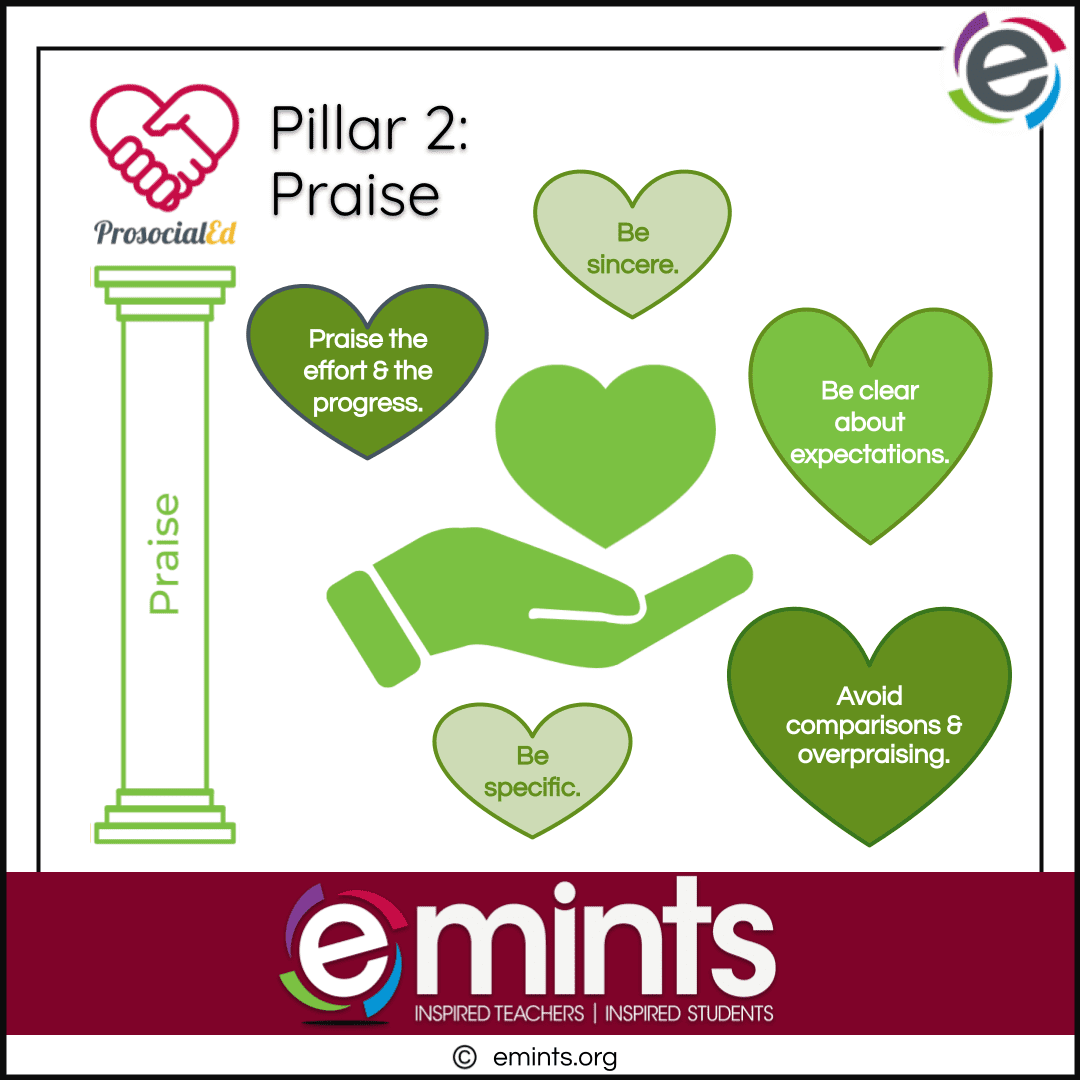
Prosocial Education Pillar 2: Praise
Praise is an intangible social reward or warm expression of approval that can be verbal or non-verbal. Examples include a high five, fist bump, thumbs up, warm smile, and pat on the back.
Praise is:
- A powerful motivational tool that can increase prosocial behavior and improve academic achievement.
- One of the most effective ways to reduce common classroom behavior issues.
To praise people effectively when it comes to prosocial behavior –
- Praise the person, not the act.
- Say “You are a kind person” instead of “That was kind of you to pick up the trash.”
- Why? We want people to internalize prosocial behavior and identify themselves with that prosocial quality.
How might shifting from praising traits to praising effort impact your students?
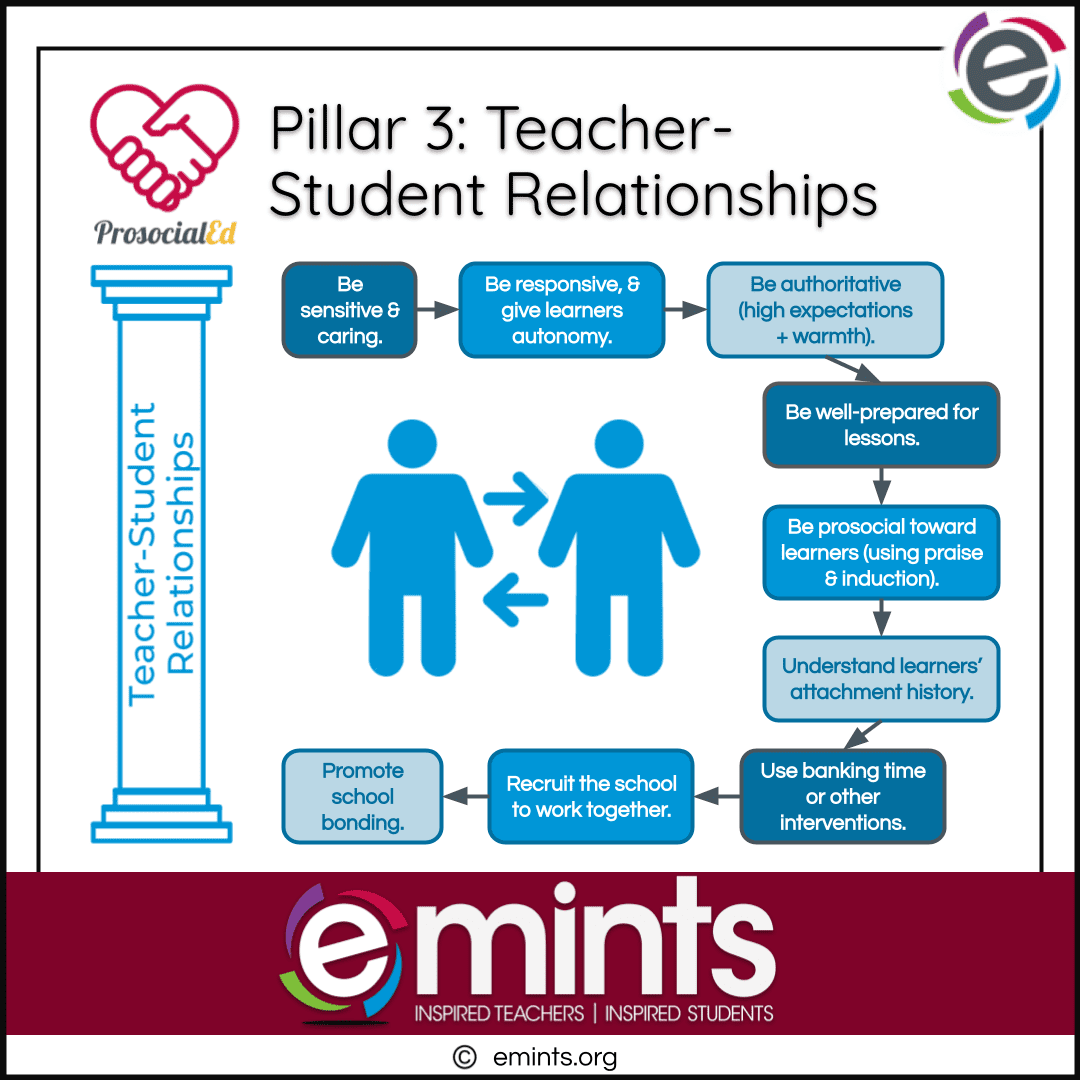
Pillar 3: Teacher-Student Relationships (TSRs)
Strong teacher-student relationships (TSRs) are essential to successful classroom management practices and dramatically increase student engagement. Strong TSRs are when a student forms a stable bond where they feel safe and loved by their teacher and therefore trust and respect their teacher.
Crystal Young, a high school Spanish teacher from Clever Public Schools, notes, “I asked students to fill out Google Forms about how they felt in class. Had they felt welcomed? Did they feel appreciated? The results were positive.” Even a small act like that can add up.
Strong TSRs lead to:
- Happier, healthier teachers and students.
- Lower levels of stress, anxiety, depression, blood pressure, risky behaviors, off-task/disruptive behaviors, etc.
- Increases in higher-quality teaching practices, student engagement, level of critical thinking and problem-solving, collaboration/teamwork, etc.
What steps might you consider taking to strengthen relationships with your students?
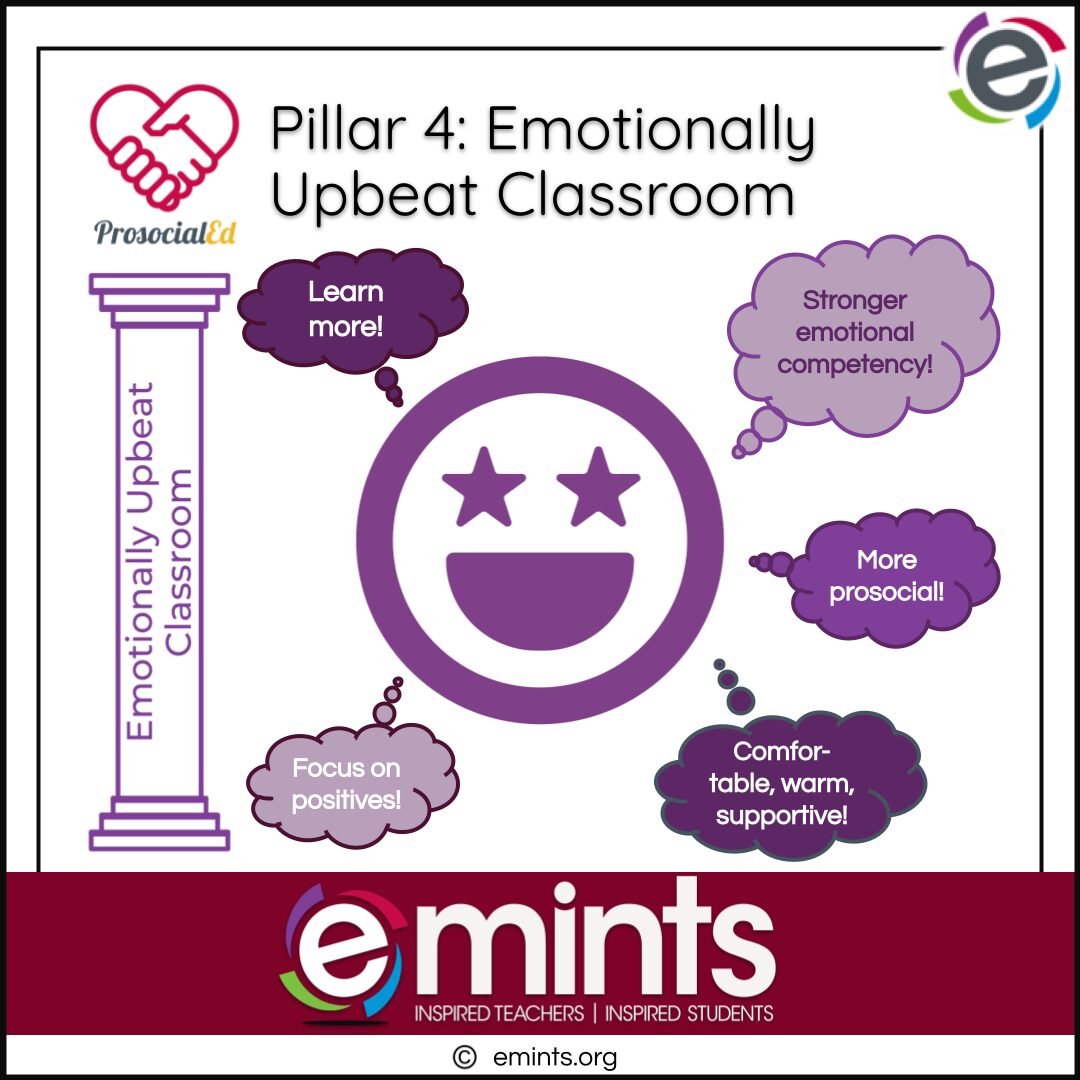
Pillar 4: Emotionally Upbeat Classroom
The emotionally upbeat classroom is a positive, warm, humorous, and inviting environment. A space like this with a palpable feeling of inclusivity and belonging opens up learning possibilities. Students feel comfortable sharing their thoughts, asking questions, and trying new things without worrying their peers might judge or make fun of them. These classrooms have a warm, supportive atmosphere where students encourage one another.
The emotionally upbeat classroom:
- Focuses more on positives (praise) than negatives (reprimands).
- Has strong TSR built on trust and respect.
- Has clear expectations shared at the beginning of the year, day, and learning activity.
What strategies might you explore to create a more welcoming and inclusive classroom?
Apply Prosocial Education in Your Classroom
Prosocial behavior leads to enhanced social skills, improved academic performance, increased empathy and emotional competence, positive school climate, and lasting skills that students carry with them into adulthood.
The Prosocial and Active Learning (PAL) Classrooms Project focuses on providing professional learning that helps educators increase prosocial education and student engagement in a school-wide approach. The PAL professional learning program has been shown to positively impact student behavior, teacher efficacy, teacher-student relationships, and student academic achievement.
PAL is currently recruiting middle schools to participate in the no-cost professional learning program beginning in the 2025-2026 school year. Visit the PAL website to learn more about being involved and let us know you’re interested by completing our interest form.

