Classroom Observations in a Co-Teaching Environment
Some of my fondest memories as a special education teacher came from a co-teaching classroom. The planning, the flexibility, and the ability to share our strengths sparked creativity and positivity for us as teachers and for our students as well.
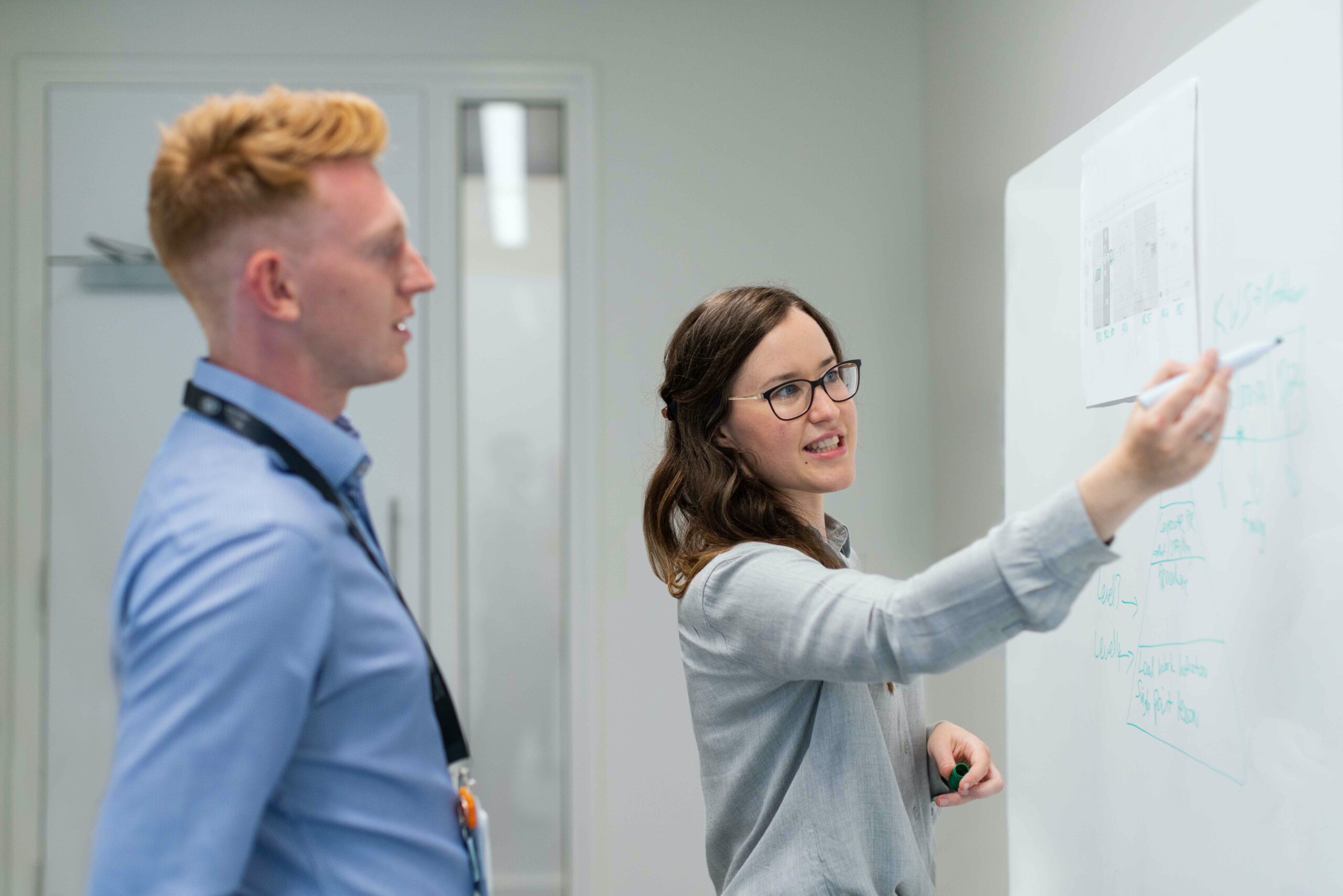
That’s when things were good, and the co-teaching experience was a true partnership. That wasn’t always the case, though. One of the benefits of conducting classroom observations in co-teaching classrooms is the ability to ensure those partnerships are in place. As a leader, evaluating a co-teaching environment not only gives a look at the effective teaching practices being employed by both teachers but also the co-teaching experience and shared responsibilities between the teachers. It provides the opportunity to make sure co-teaching in your building works for the benefit of student learning.
For a co-teaching environment to be successful, the right structures and processes must be in place. Before beginning the evaluation process, take the time to set up learning experiences on co-teaching for the teachers taking part in the process, and strategize with the special education director and external supports to make sure co-teaching is understood and implemented properly. To learn more about effective co-teaching environments, check out our EdHub series on co-teaching titled Using the Co-Teaching Model. You can find it in the Student Learning, Growth and Development section of EdHub, inside the NEE Data Tool.
Like any good evaluation, the beginning of the process should be a conversation. There are multiple conversations the school leader should have to set the stage for effective co-teaching classrooms.
- One conversation should be between the leader and special education director about what the expectations are for co-teaching, why those two teachers were chosen to teach in tandem, and what the principal and special education director can do together to support the co-teaching classroom.
- A second conversation should include the leader, the general education teacher, and the special education teacher. This conversation should happen before the school year begins. The school leader should outline the expectations for the co-teaching classroom, the roles and responsibilities that are shared and/or distributed between the teachers, and the goals of the co-teaching environment. It would also be pertinent to address the indicators of effective teaching that the school is focused on in evaluations to reinforce the need to incorporate those practices into classroom instruction.
Those conversations should occur prior to the co-teaching experience and throughout the co-teaching experience. That’s where the purpose of the observation process comes in. Classroom observations provide opportunities for conversation. Observing a co-teaching classroom gives you the chance to observe the effective teaching practices occurring as well as make sure the co-teaching model is being implemented in the intended manner.
During the observation cycle, only one teacher should be the focus of a single observation. It’s much easier to have one feedback conversation based on the effective teaching practices used by that teacher than it is to juggle your attention between two teachers. Choose the special education teacher or the general education teacher and give them your attention. During the observation, the teacher you choose may be in more of a support role, and that’s okay as well. You can still check on the effective teaching practices that either happen with individual students or small groups of students or the teaching practices that happen in a more behind-the-scenes manner. No matter what is happening, both teachers should be active and engaged in teaching practices through the co-teaching model.
You may also take the opportunity to calibrate with the special education director during the observation to further align the values your school has for co-teaching classrooms and to share thoughts and notes.
After the observation, think through the feedback you plan to provide, and remember to align it to the co-teaching model to ensure that any action steps developed during the feedback conversation can be pursued and implemented.
For more information about how to provide effective feedback, check out our other blogs:
- Professional Learning Action Steps Align with Feedback Paths
- How to Select a Focus to Improve Post-Observation Feedback Conversations
Tom Hairston is the Managing Director of the Network for Educator Effectiveness and has worked with NEE since 2011. Prior to his work with NEE, he worked as a Positive Behavioral Interventions & Supports Consultant for the Heart of Missouri Regional Professional Development Center at the University of Missouri. He began his career in education as a high school special education and language arts teacher and football coach at Moberly High School in Moberly, Mo. Tom received his PhD in Educational Leadership and Policy Analysis from the University of Missouri in 2012.
The Network for Educator Effectiveness (NEE) is a simple yet powerful comprehensive system for educator evaluation that helps educators grow, students learn, and schools improve. Developed by preK-12 practitioners and experts at the University of Missouri, NEE brings together classroom observation, student feedback, teacher curriculum planning, and professional development as measures of effectiveness in a secure online portal designed to promote educator growth and development.