How Dictation Technology Can Address Student Literacy Challenges
A professional learning program focused on improving student literacy has shown promising gains for struggling readers. Through the use of dictation technology, students are able to share their own stories and watch as the words appear on the screen.
Dr. Betsy Baker, creator of Talk to Read, describes the origin of the program: “I wondered how I could center their stories in our literacy program. I wondered how my students could be the main characters of our children’s literature.”
The Talk to Read professional learning program, funded by a U.S. Department of Education grant, helps second- and third-grade teachers elicit and scaffold students’ own background and vocabulary to contextualize reading skills within their current reading programs.
Teachers learn ways to use technology, especially dictation, to improve sight word vocabulary, reading comprehension, and classroom management.
Findings indicate that learners classified as struggling readers can develop self-efficacy and become eager readers and writers when participating in Talk to Read.
Dictation Technology: A Tool for Today’s Literacy Challenges
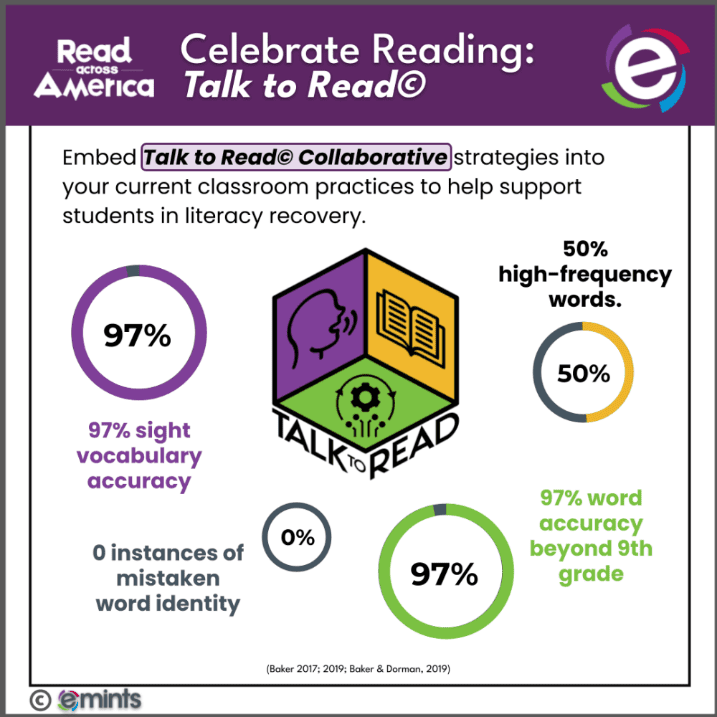
Using dictation technology, we can speak to our devices and watch as our oral language magically appears on the screen! Studies indicate that students involved in Talk to Read develop over 97% sight vocabulary accuracy with the words they dictate and incorporate into personally meaningful compositions.
Dictation can help by:
- Enhancing spelling and phonics when students see words they know
- Boosting vocabulary development and bringing the student’s rich oral language to the classroom
- Supporting differentiation of learning to help scaffold writing
Getting started with dictation is as easy as using any tablets that have a “talk to text” feature. This could be in a Notes app, a Google Doc, or a number of web extensions.
A Strong Foundation: Essential Elements of Talk to Read
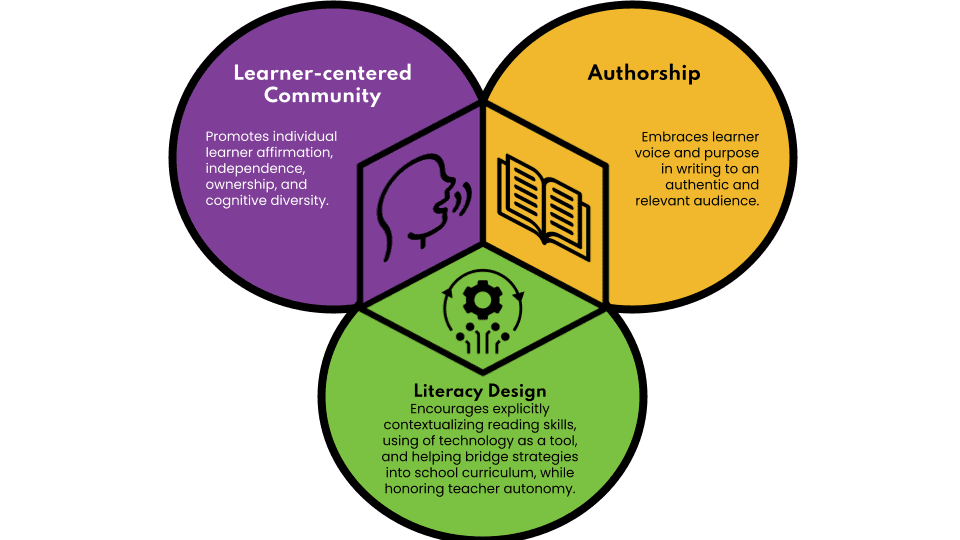
Incorporating a student’s vocabulary is essential, and literacy learning is enhanced by community, design, and authorship.
- A learner-centered community is a safe place for students to interact, bring their vocabulary, and share stories with peers.
- Literacy design brings student stories and vocabulary to life and highlights the curriculum as it applies to every student.
- Authorship in the classroom gives students a purpose for writing to authentic audiences.
Using Talk to Read strategies, teachers work with students on “Goldilocks” skills that match what the individual student needs and help target skills unique to them.
Apply Talk to Read Strategies in Your Classroom
Findings indicate that Talk to Read literacy strategies improve self-efficacy for struggling readers and help second- and third-graders become more eager readers and writers. Talk to Read has the potential to dramatically grow students’ vocabulary, enhance student engagement, and improve classroom management.
Talk to Read is currently recruiting second-grade and third-grade teachers to participate in the cost reimbursement professional learning program beginning in the 2025-2026 school year. Learn how to apply Talk to Read strategies within your current curriculum and boost your students’ literacy skills. Visit the Talk to Read website to learn more about being involved, and let us know you’re interested by completing our interest form.
Data source: https://talk2read.emints.org/project-info/research