The Importance of NEE Data in the CSIP Needs Assessment
Now that school is back in session and our schedules are settling into familiar routines, many district administrators in Missouri are returning to the work of the Missouri School Improvement Program, more commonly referred to as MSIP-6. Most districts are directing their energy toward meeting new requirements for their Comprehensive School Improvement Plans (CSIP).
With the craziness of teaching our students during a global pandemic, CSIPs have understandably not been a priority over the last few years. A district’s current CSIP may not have been revised recently and, even if it has, the changing needs of districts given the effects of the pandemic on student learning may render the CSIP dated and in need of a complete rewrite.
In many cases, district and school leaders may be tempted to jump in and write goals for needs that seem obvious. However, starting the CSIP process without a deep review of data and practices can result in addressing the symptoms of district needs while leaving the root causes untouched.
A better practice is for districts to conduct a needs assessment. A needs assessment brings together many sources of information and data. This data is reviewed to reveal strengths, weaknesses, and patterns. Data might include state and local assessments, diagnostic reading and math assessments, student grades, discipline reports, enrollment data and trends, demographic information, state or community sources of data, culture and climate survey data, input from community meetings, and other types of data relevant to the CSIP process. Districts will find the more data sources used, the better picture they have of their district and student needs.
Districts that are part of the Network for Educator Effectiveness (NEE) should also include NEE data in their needs assessment. NEE data can provide insight into classroom instructional practices and reveal specific action steps to address core needs of the district.
The following NEE data reports might be helpful for districts conducting a needs assessment.
NEE Indicator Trend Report
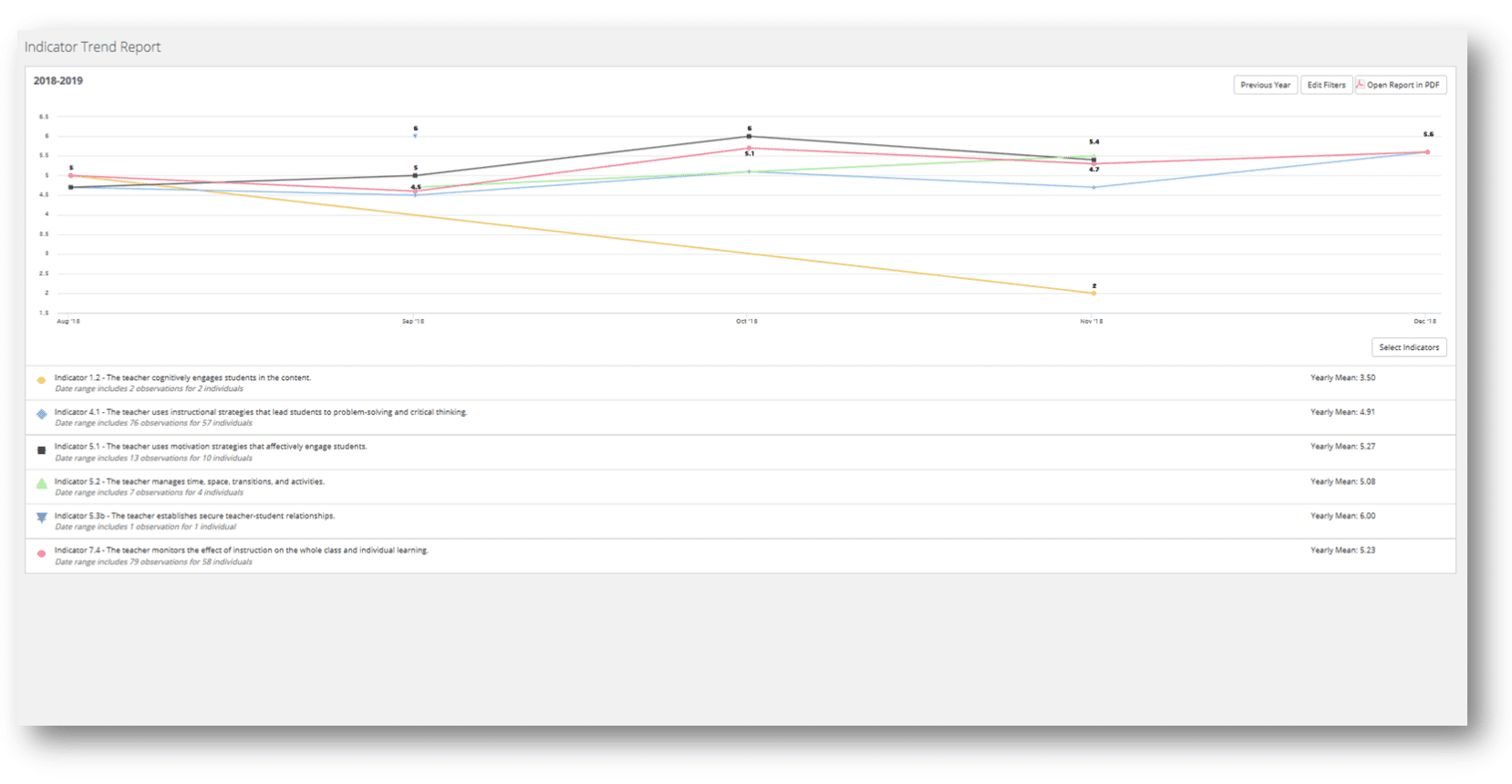
The Indicator Trend Report is a great starting place to review NEE data. The report is a line graph that shows how teachers across the district have performed on the focus indicators in classroom observations over time. You may also drill down to look at specific buildings or groups of teachers.
It would be good to look at the current data as well as up to three years of previous data. Are there trends in the data over the years indicating strengths, areas for improvement, growth over the years, or any other patterns that would be helpful?
NEE Student Survey Summary
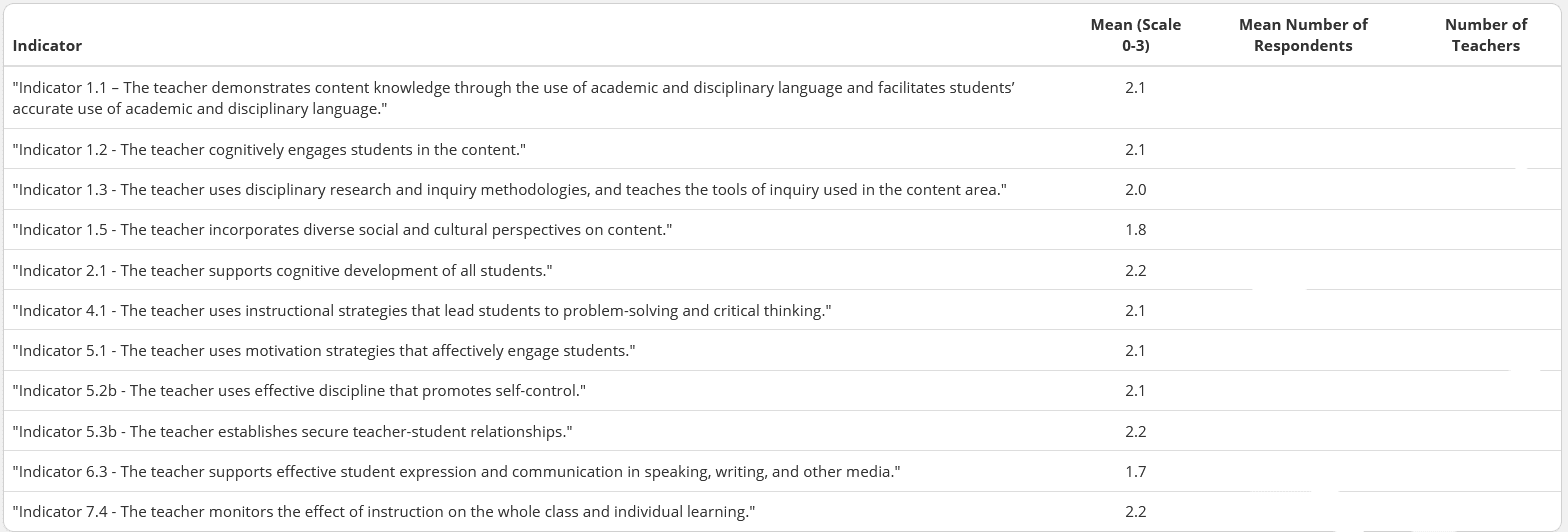
The NEE Student Survey Report is another aggregate report that shows the mean score for each indicator included in NEE Student Surveys administered across the district. When reviewing data from the NEE Student Survey Report and the NEE Indicator Trend Report, answer the following questions:
- Do the data indicate any strengths or areas of concern with the focus indicators you are using in your classroom observations and student surveys? If so, what might be the effects on district goals or action steps?
- Do the data from the NEE Student Survey and classroom observations align? If not, what would this seem to indicate, and what needs to be done?
- Are the focus indicators in line with district goals, or should the district consider changing focus indicators to better align with goals?
NEE Teacher Survey Summary
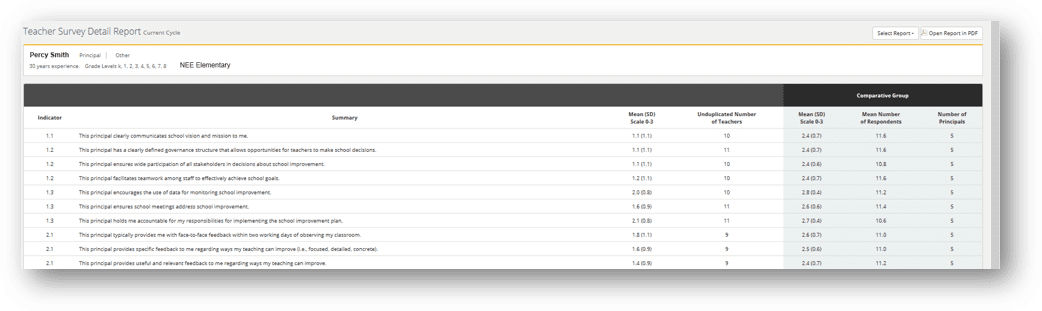
The NEE Teacher Survey Report is also a useful source of information for the needs assessment. The NEE Teacher Survey Report shows the mean score for each NEE Teacher Survey item used to measure principal effectiveness across the district.
Start with the most current teacher survey report, but also look at 2-3 years of teacher survey data. Look for strengths, areas for improvement, and areas where the district has experienced growth. If you have completed the culture and climate survey, review the results from both surveys to see what conclusions may be drawn.
NEE Building Activity Report
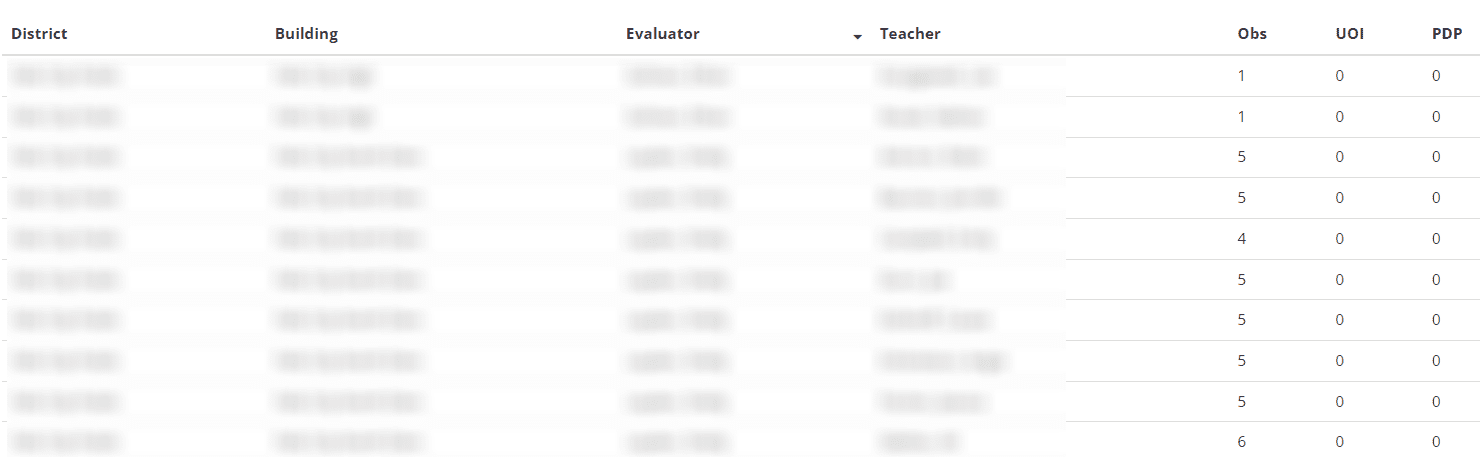
A report that might not initially come to mind for the needs assessment is the NEE Building Activity Report. Review 2-3 years of data to see how many classroom observations most teachers have received. NEE recommends evaluators conduct 6-8 classroom observations for each teacher with appropriate feedback, but districts set their own expectations to meet their needs. Consider whether the number of observations conducted for each teacher will be sufficient to provide ongoing feedback for growth in the goals you eventually set in your CSIP.
Reviewing the NEE data along with other district and school data through the needs assessment will help districts establish goals and action steps as part of a CSIP that can be a meaningful strategic plan for districts. Make sure that once your district has its goals, the current NEE focus indicators are reviewed to see whether they are still addressing district goals. Revision may be necessary.
A good, thorough needs assessment is a crucial step in the CSIP process. Gathering this data will help districts create a snapshot of their current status and determine the practices they need for the future.
Chuck Mayes is a NEE trainer and field support representative. He retired in 2020 after 30 years in K-12 public education where he served as a teacher, elementary principal, middle school principal, and for eight years as the Sikeston Chief Academic Officer/Assistant Superintendent working with curriculum, assessment, gifted education, and virtual learning.
The Network for Educator Effectiveness (NEE) is a simple yet powerful comprehensive system for educator evaluation that helps educators grow, students learn, and schools improve. Developed by preK-12 practitioners and experts at the University of Missouri, NEE brings together classroom observation, student feedback, teacher curriculum planning, and professional development as measures of effectiveness in a secure online portal designed to promote educator growth and development.